April 6, 2026|י"ט ניסן ה' אלפים תשפ"ו The Tale of Two Candles
Print Article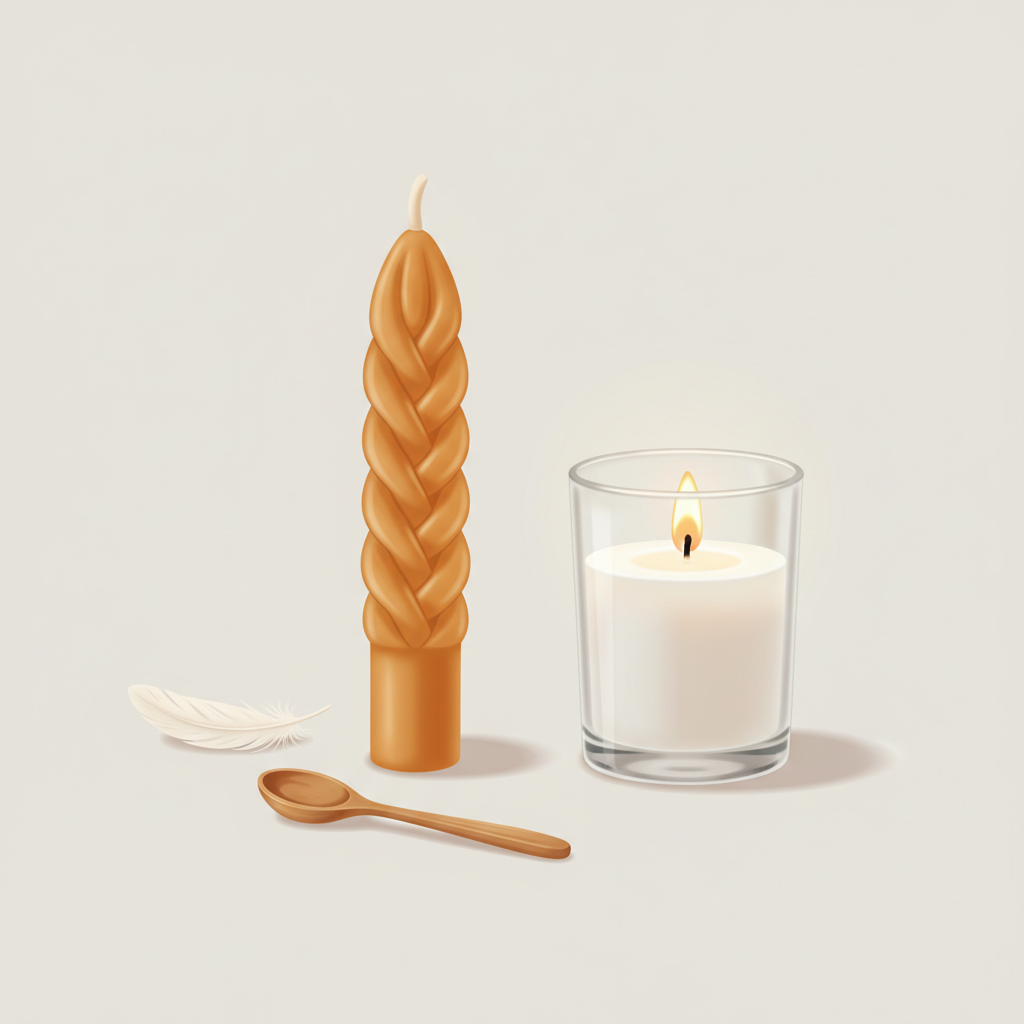
In semicha, rabbinical students are trained for nearly every aspect of the rabbinate. There are classes on how to officiate at a levaya, how to prepare a proper hesped, even practical guidance down to something as small as choosing the right funeral tie. Yet for all the preparation, nothing can truly ready you for the moment you stand before a grieving family and are asked to give voice to a life. Early in my rabbinic career, I was confronted with what remains the most difficult funeral I have ever officiated.
A woman had passed away, and I was asked to conduct the levaya. As I always do, I met with the family beforehand to learn about the nifteres so I could give her proper kavod acharon. But before I could even begin asking questions, her daughter turned to me and said, “Rabbi, I don’t want you to say anything nice about my mother.” Taken aback, I gently asked, “Was there truly nothing admirable? Nothing redeemable?” “Oh, there was,” she replied, “but I don’t want you to speak about it. She was a terrible mother and nothing good should be said about her.” And with that, I was left with the daunting task of delivering a hesped.
On the eve of Pesach, we began Yom Tov with bedikas chametz. With a wooden spoon, a feather, and the soft glow of a single-wick candle, we searched our homes and our hearts for chametz, for that which does not belong. And now, as Pesach comes to a close, we once again light a candle, this time for Yizkor. There is a striking contrast between these two candles, one that carries a powerful and timely message.
The Imrei Chaim, Rabbi Chaim Meir Hager, the fourth Vizhnitzer Rebbe, asks a fascinating question. After bedikas chametz, we gather the crumbs, along with the spoon and feather, and burn them. But we also burn the candle. Why? The spoon and feather make sense because they came into contact with chametz, but the candle never touched the chametz. Why must it be destroyed?
The Vizhnitzer Rebbe answers with profound insight that the candle must be burned not because it became impure, but because of what it represents. Its sole function was to search for flaws, to seek out crumbs, imperfections, and faults. Something whose entire purpose is to find what is wrong cannot endure. Even something useful, even something necessary, if it is defined entirely by negativity, by fault-finding, by searching for what is broken, must ultimately be discarded.
When I first heard this idea, shared by my friend Baruch Cohen in the name of his Vizhnitzer heritage, it struck me deeply because it highlights the powerful contrast with the other candle of Pesach, the Yizkor candle. The bedikas chametz candle is destroyed, but the Yizkor candle is preserved. Even after Yom Tov ends, if the Yizkor candle is still burning, we do not extinguish it, and if it goes out, we do not discard it. The Sefer Chaim HaNitzchiyim, quoting the Magen Avraham, teaches that one should repurpose it, donate it to a shul or use it for learning, but never destroy it. The Yizkor candle represents something entirely different. It is also a candle of searching, but not for faults. It illuminates the memories of those we have lost and helps us find the good, the admirable, the meaningful. It allows us to see not just what was visible on the surface, but what lies beneath, the neshama, the essence, the enduring light. The bedikas chametz candle reveals the external, while the Yizkor candle reveals the eternal.
Yehuda Becher grew up in a deeply religious home. His father is a rav, but like so many, Yehuda was on his own journey. As he grew older, he moved away from outward religious observance. If you looked at Yehuda through the lens of a bedikas chametz candle, you might have seen what appeared to be shortcomings, including the fact that he attended the Nova music festival on Simchas Torah. But the Hamas terrorists who attacked that day did not distinguish between levels of observance. They sought to murder Jews, and they succeeded in taking Yehuda’s life. Through the eyes of those who loved him, through the light of the Yizkor candle, a very different Yehuda emerged. His brother described him as someone with sparkle, charisma, and a huge heart. His father expressed gratitude to Hashem for the privilege of being his father for twenty-four years. A close friend called him a gentle soul with eyes that seek all the beauty in the world.
That friend shared that just days before his death, he had been feeling deeply depressed. Yehuda, wanting to lift his spirits, recorded a video of himself singing joyfully while driving, his face radiant and his voice full of life. The song was Elokai Neshama, the tefillah we say every morning. We say those words daily, but rarely with that kind of passion and authenticity. Yehuda was not merely reciting the words, he was living them. His father later shared that on Sukkos he told Yehuda a teaching from Rabbi Levi Yitzchak of Berditchev that every soul descends into this world with a unique melody taught by an angel, a song that sustains it through life’s challenges. Yehuda was singing his song. He used his light not to find fault, but to uplift, not to criticize but to connect, not to diminish but to build.
At the Nova exhibit that was hosted in Miami a couple years ago, alongside the tragic remnants of that day, there was something unexpected. There were sefarim, Tehillim, and teachings from Rebbe Nachman. If you look with a bedikas chametz candle, you see a festival on Yom Tov, but if you look with a Yizkor candle, you see souls searching and yearning, still connected to their source. The Gemara in Sanhedrin teaches on the pasuk “כפלח הרימון רקתך” that even those who appear empty are filled with mitzvos like a pomegranate is filled with seeds. From the outside a pomegranate looks ordinary, but inside it is overflowing.
We begin Pesach with a candle and we end Pesach with a candle, but they are not the same. One searches for flaws and is burned, while the other searches for goodness and is preserved. Yizkor challenges us with how we will see. Will we look at others and even at ourselves with the harsh, critical light of bedikas chametz, or will we illuminate the world with the gentle, enduring glow of the Yizkor candle.