December 1, 2025|י"א כסלו ה' אלפים תשפ"ו The Sound of a Beer Bottle: A Twenty-Year Journey, One Day at a Time
Print Article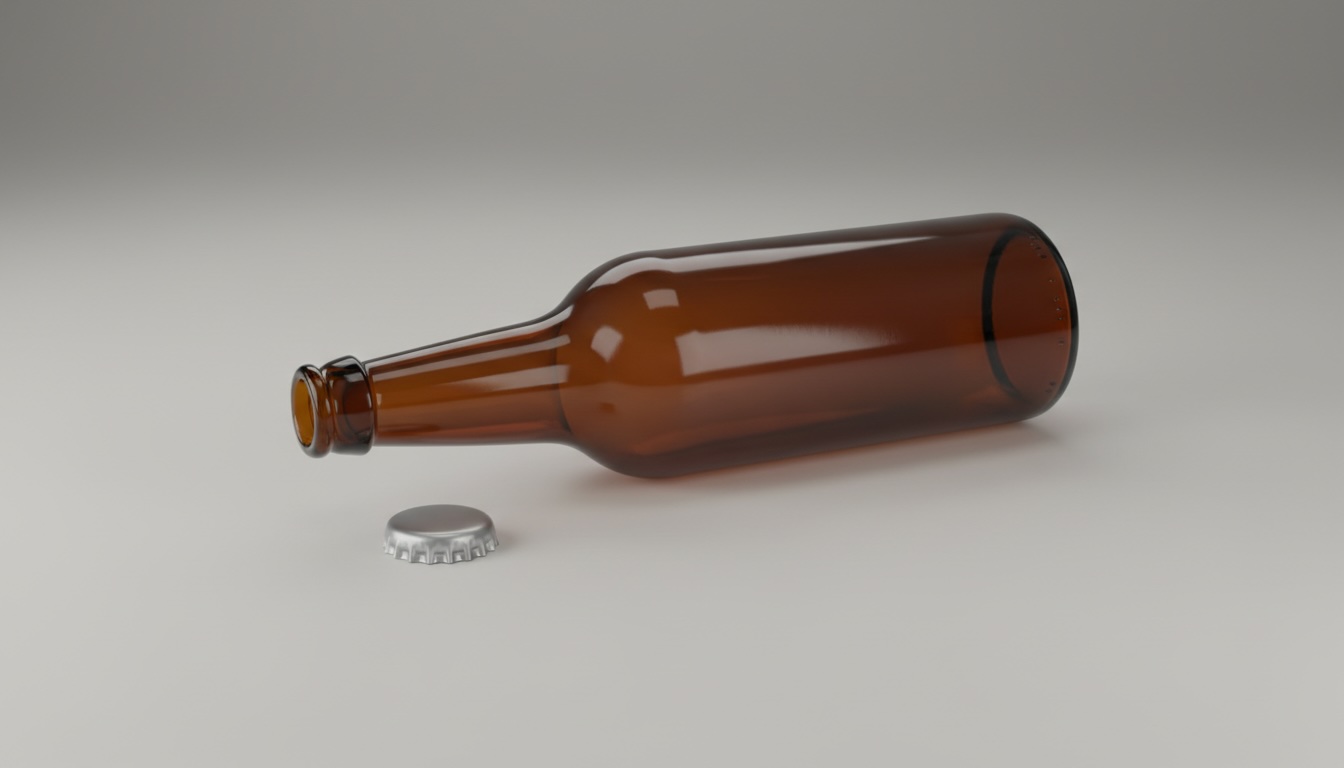
Twenty years ago, a woman I knew came to me with a heavy heart. She was married to a man who had become an alcoholic. This wasn’t social drinking nor was it “a little too much at kiddush or at a simcha.” It was a pattern that was slowly hollowing out his life and his home. She was clear on what had to happen, but she lacked the courage and confidence to confront him. She asked me if I would.
As a young rabbi, I was inexperienced in this area (and most others) but I knew one thing: confrontation can humiliate or it can heal. It can push a person further into denial, or it can become the beginning of their redemption. I agreed to speak with this husband, not because I had guarantees about how it would go, but because looking away and staying silent was no longer an option.
I called him and asked if I could stop by. I didn’t spell out why, I just asked if we could catch up. I will never forget that evening: the fear I felt pulling up to his house, the tefillah I whispered asking Hashem to give me the right words. When I arrived, we sat outside. In his typical generous hospitality, he opened two beers, one for himself and one for me. On the surface, it was the picture of two people, friends shmoozing on a nice Florida evening. We spoke about work, family, life. It felt casual, unforced.
But the whole time, beneath the surface, I knew I wasn’t there just to catch up. I wasn’t there to judge him, label him, or attack him. I was there to share a truth that his wife, some close friends, and I all saw clearly, and that he, on some level, likely already knew but had not allowed himself to fully face. At a certain point, I gently steered the conversation where it needed to go.
“Look, I didn’t come here only to hang out. I came because your wife, some close friends, and I are very concerned. We see the role alcohol plays in your life, and it isn’t healthy; it has gotten out of control. This isn’t easy for me to say, but it’s harder to watch you continue this way and say nothing.” When you bring something like this up, you brace yourself for the response: “You’re overreacting. Everyone drinks. This is my business, not yours. Mind your own business. Stay out of my personal life.” You expect anger, denial, defensiveness.
This man didn’t do any of that. He didn’t blow up or storm off. Instead, he looked at me. Really looked at me. He gave me a long, strong, searching stare that made time feel like it had slowed down. It wasn’t a hateful look, and it wasn’t even particularly angry. It was the look of a man suddenly faced with a mirror he could no longer avoid. In that moment, it felt as if he was asking himself, “Is this really what people see when they look at me? Is he serious? Am I an alcoholic? Have I lost control?”
Then, without fanfare, without any dramatic declaration, he put his beer down and the sound of the glass made a clank. He did not take another sip. We continued to talk. From the outside, nothing dramatic had changed. There was no emotional explosion, no tearful promise, no big speech. But in that simple act of placing the beer down and not picking it back up, a line had been drawn. A decision had been made.
That beer was the last drink he ever took. From that day forward, he threw himself into recovery. He did not try to do it alone. He joined a recovery program. He went to meetings. He got a sponsor. He surrounded himself with people who understood his struggle and were committed to helping him heal and rebuild his life. And here is what is so remarkable: he told me that not only has he not touched alcohol since that day, but he has not even felt tempted to drink. Not once.
Twenty years ago, he put down that bottle and hasn’t picked up alcohol since, but that is far from the only change in his life. Twenty years of sobriety has meant twenty years of showing up differently for his family, for himself, for his career, and for Hashem. From the outside, it looks like he made one decision and held to it for two decades. But that is not how it really works. Recovery is not accomplished in twenty-year chunks. It can only ever be lived one day at a time.
When someone faces a destructive habit, whether alcohol, drugs, uncontrolled anger, dishonesty, impatience, or anything else, and realizes something must change, they often hear or tell themselves, “You can never do this again for the rest of your life. You have to stop forever.” The natural reaction is panic. “The rest of my life? Never again? That’s impossible. I’m guaranteed to fail.” The phrase “for the rest of your life” feels so big, so heavy, that it nearly paralyzes the person before they even take their first step.
We simply are not designed to live for “forever.” We are only capable of living today. But if instead you say, “Don’t drink today,” something shifts. Today is manageable. Today is concrete. Today feels attainable. Whatever we need to eliminate or work on, as soon as we move it into the realm of “forever,” it feels hopeless. But when we bring it down to one more day, to today, it becomes possible.
That is the secret of recovery: one day at a time. Not, “I will never drink again,” but, “Today, I will not drink. Today, I will stay sober.” And tomorrow, with Hashem’s help, we will say it again. You wake up in the morning and you don’t stay sober for twenty years; you stay sober for this morning, for this afternoon, for this evening. You do that enough times, and before you know it, those individual days have added up into something enormous. One day you turn around and realize that one more day and one more day and one more day without became twenty years.
When Yaakov Avinu agrees to work for Lavan for seven long, challenging years in order to marry Rochel, the Torah tells us something very surprising: “Vaya’avod Yaakov b’Rochel sheva shanim, vayihyu b’einav k’yamim achadim b’ahavaso osah.” Yaakov worked for Rochel for seven years, and they seemed to him but a few days, k’yamim achadim, because of his love for her.
At first glance, this is difficult to understand. When we long for something, when we are waiting for someone we love, time usually moves slowly. Every day feels like an eternity. When a chassan and kallah are waiting for their wedding, when someone is waiting for a refuah, when a person is waiting for vacation to start, it rarely feels like a “few days.” If anything, it feels like forever. So how could the Torah say that seven hard years passed for Yaakov “like a few days”?
Rabbi Dr. Abraham J. Twerski z”l, who was a world-renowned expert, thinker, and writer on addiction and recovery, suggests a beautiful insight. He points out that the word “achadim” shares a root with the word “echad,” one. Yaakov did not live those seven years as one overwhelming, crushing block of time. He lived them as yamim echadim, one day at a time. Each day was a single unit of avodah: one day of working, one day of being one step closer, one day of commitment, one day of holding on to his love for Rochel and his trust in Hashem. Seven years is daunting. “Today” is not. When one lives in the present day, focused on what today demands, seven years can indeed pass “like a few days.”
When my friend quietly put his beer down that day, I don’t believe he was consciously committing to perfection for the rest of his life or picturing celebrating his twentieth anniversary of sobriety. He was taking the next right step. He was agreeing to face the truth, to seek help, to walk into that first meeting, to say no to the immediate urge. He was choosing to live that day differently. Hashem took that one courageous “today” and, one day at a time, turned it into twenty years.
He and I met recently to sit and talk once again and to celebrate the twentieth anniversary of that fateful conversation. He shared with me, “When I put the bottle of beer down, something happened. Something humanly unexplainable. A profound change happened instantly. The only attribute could be Hashem. He was the catalyst that began this journey.” In recovery, step three is to submit to a higher power and trust in God for help. Twenty years ago, my friend discovered a real and raw relationship with Hashem, a genuine and ongoing conversation with the Almighty.
As I marveled at his fortitude and accomplishment, I thought to myself: every one of us has something we need to work on, a temper that flares too quickly, a tongue that speaks too freely, a laziness that holds us back, a jealousy that corrodes our happiness, a private behavior we are ashamed of. When we tell ourselves, “I must never do this again for the rest of my life,” we set ourselves up to feel crushed and defeated. We mean well, but we are thinking in terms that only Hashem can handle.
What if, instead, we thought and spoke to ourselves the way Torah and recovery both teach us to: “Today, I will be careful with my speech. Today, I will work on being more patient. Today, I will not open that site, that bottle, that door. Today, I will show up as the husband, wife, parent, friend, Jew I know I can be.” The next day, we take a deep breath, trust in Hashem and say it again. Forever is not in our hands. Today is.
If you are like the woman in this story, watching someone you love slipping into something destructive, the feeling of helplessness can be overwhelming. You look at their future, and at yours, and “the rest of our lives” feels unbearably heavy. But you are not responsible to fix the rest of their life in one action, and you are not expected to know exactly what the next twenty years will bring. You can take one step. She took one step by reaching out and asking for help. I took one step by agreeing to have a hard conversation. He took one step by putting down that beer and walking into recovery. Each of those steps was a yom echad, a single day’s act of courage. Hashem can multiply that.
And if, in this story, you recognize yourself not in the wife but in the husband, if you sense that your drinking, or some other behavior, your private life, has become something you no longer fully control, then please hear this clearly: you do not need to promise perfection and you do not need to swear that you will never struggle again. You need to be honest today. Today, admit that this has gotten out of control. Today, share it with someone you trust. Today, make one phone call, walk into one meeting, send one message asking for help. Today, ask Hashem for the strength not for the next twenty years, but for the next twenty-four hours.
The yetzer hara, the voice of self-sabotage, loves the language of “forever.” It whispers, “You’ll never keep this up. You’ll fail eventually. Why even start if you can’t be perfect?” Torah and genuine recovery answer with the language of echad: not forever, but one. One step. One day. One honest conversation. One sincere tefillah. One refusal to pick up the next drink.
Twenty years ago, a wife’s fear, a husband’s hidden readiness, and one difficult but loving conversation converged on a porch. I can still hear the sound of him putting down that beer. That small, almost unremarkable motion did not just end a drink; it began a new life.
Published with permission