February 11, 2026|כ"ד שבט ה' אלפים תשפ"ו Why There is No "Someone Else"
Print Article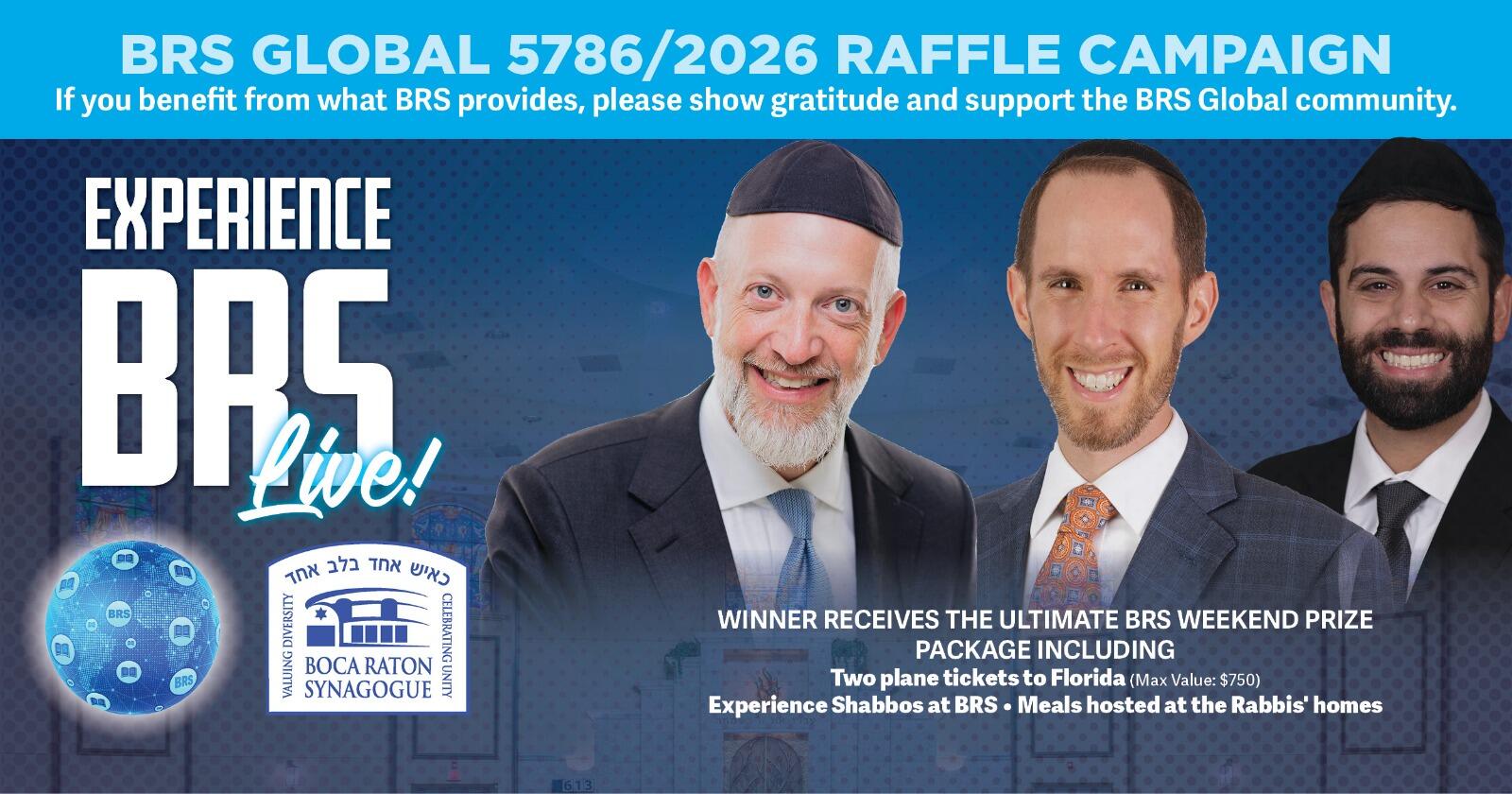
Over the past decade, something subtle but profoundly consequential has shifted in our collective mindset. There was a time when “free” felt like a gift: unexpected, generous, and almost miraculous. But slowly, and without notice, “free” stopped feeling like a blessing and started feeling like a baseline expectation. What once inspired gratitude now often triggers entitlement. This shift is not only cultural or economic. It is deeply spiritual.
We have become accustomed to receiving extraordinary value instantly and effortlessly. With a tap or a swipe, we learn, watch, listen, scroll, and download. But rarely do we pause to consider the cost behind what appears to be free. The writers, the educators, the engineers, and the infrastructure, representing the countless hours poured in by people we will never meet, all fade into the background, hidden behind the screen.
Of course, free never means costless. It simply means that someone else is paying. Sometimes we pay with our data or attention. Sometimes we pay with privacy. But often, the true cost is carried quietly by others in their time, resources, emotional energy, or burnout. The more we grow accustomed to receiving without contributing, the more something within us subtly dulls. Responsibility loosens, expectations inflate, and the mindset that develops online inevitably spills into our real lives, into our communities, our relationships, and even our relationship with Torah itself.
Judaism teaches that gratitude is not merely a feeling or a polite thank you. It is a posture. It is action. It is participation. The very word “Yehudi” comes from hoda’ah, meaning acknowledgment or admission. To be a Jew is to recognize that we are not self-made. We depend on Hashem and we depend on one another, and that dependence demands a response.
If someone examined your credit card statement, what story would it tell? What would they conclude truly matters to you? Our spending is not random. It reflects our comforts, our habits, and our priorities. But does it reflect our values, our spiritual aspirations, or our commitment to community?
We spend, often unthinkingly, on convenience, entertainment, and endless upgrades. Yet when it comes to Torah institutions, communal life, and spiritual growth, we sometimes hesitate. Not because these things do not matter to us, but because we have grown used to receiving without being asked. So when a website pops up with a request to support the Torah content we enjoy daily, we click away and continue receiving the benefit while assuming someone else will contribute.
That is why Parshas Shekalim speaks so powerfully to our moment. Every Jew over twenty was required to give a machatzis hashekel, a half shekel, to fund the communal offerings in the Beis HaMikdash. It was not a voluntary contribution, nor was it tiered by income. The Torah makes a point of saying that the rich shall not give more and the poor shall not give less. Why not let the wealthy shoulder the full cost? Why obligate the poor at all?
Because community is not built by spectators. It is built by stakeholders. The Torah insists that every Jew, no matter their means, must have a share, a portion, and a stake in sustaining our sacred life together. No one is meant to be a passive consumer of Jewish life. We are meant to be partners in building it.
The half shekel teaches that belonging requires contribution. It is not enough to care. One must commit. It is not enough to appreciate. One must participate. The instinct to assume that someone else will take care of it is not new. We tell ourselves someone else will donate, someone else will volunteer, or someone else will lead. But the Torah responds with a gentle but firm truth: there is no someone else. There is only us.
In our digital age, it is easier than ever to opt out. No one sees if you close the appeal. No one knows if you scroll past the fundraiser. But Torah is not about what others see. It is about who we become. Gratitude is not the debt we owe to make the giver whole. It is the gift we give to make ourselves whole, an expression of humility, of acknowledgment, and of recognizing that our lives have been enriched by others.
When we contribute, even modestly and even privately, we undergo a subtle yet profound transformation. We shift from passive recipients to active partners, from consumers to builders, and from takers to sustainers. The question is not whether everything must be monetized. Of course not. The explosion of accessible Torah is an enormous beracha. The question is whether the culture of free has eroded our instinct to give back.
So we must ask ourselves—when something uplifts you, inspires you, strengthens your emunah, or deepens your learning, do you see yourself as a consumer or as a partner? Even a small contribution matters. Not only because of what it enables, but because of what it says about our investment and our place in the community.
The Beis HaMikdash was sustained not by a handful of magnanimous donors, but by a nation of half shekel partners. Free can be kind, but gratitude must be intentional. Before assuming that free means no cost, pause and ask who made this possible and how you can help sustain it. Reflect on what you consume and equally on what you contribute. Cultivate the habit of noticing the effort behind the inspiration.
With that in mind, I want to share that our annual BRS Global Campaign is now underway. Every shiur you listen to, every class you watch, every article you read, and every moment of Torah that strengthens your soul is made possible only through the partnership of those who believe in spreading Torah to every corner of the world.
If BRS Torah has enriched your life in any way, if it has helped you grow, inspired you, challenged you, or brought you closer to Hashem, I ask you to consider expressing that gratitude in a tangible way. Our ability to continue teaching, sharing, and uplifting depends on those who benefit stepping forward to sustain this sacred work. If you have not yet participated, please take a moment today to join us as a partner by visiting brsonline.org/global and making your contribution. Your gift declares that this matters, that you are part of this, and that you are counted in.