January 5, 2026|ט"ז טבת ה' אלפים תשפ"ו When Football Meets Faith: Does God Really Care Who Wins?
Print Article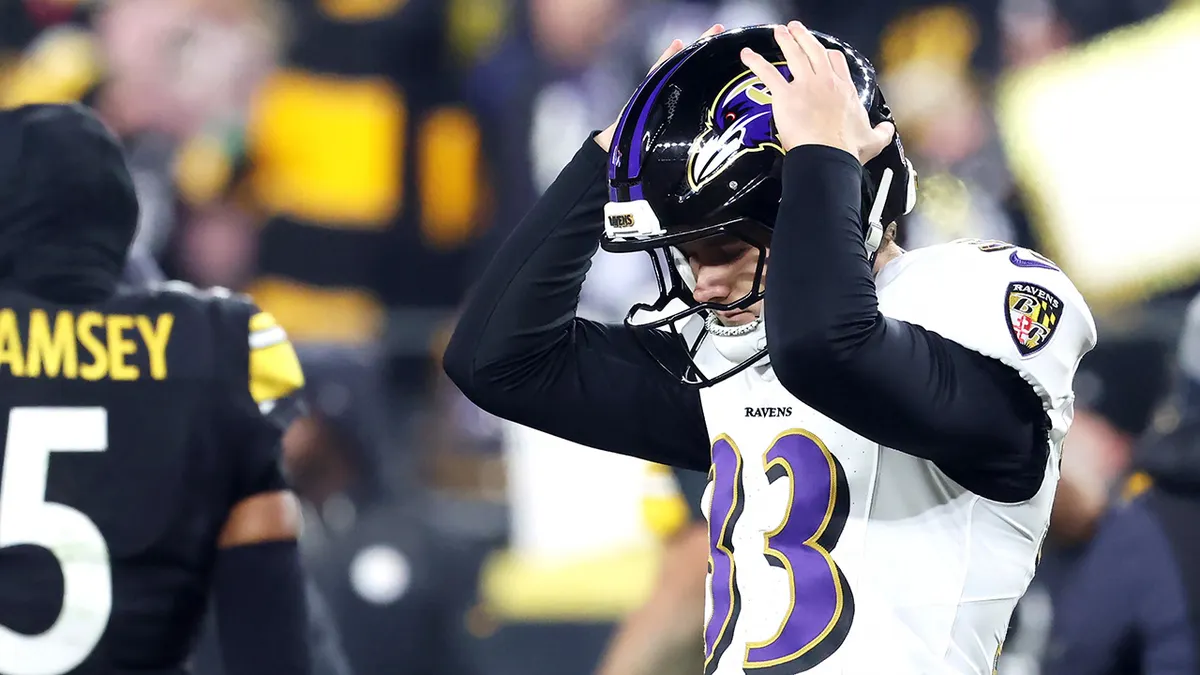
On Sunday night in Pittsburgh, the Baltimore Ravens and Pittsburgh Steelers’ seasons came down to one kick. Tyler Loop, the Ravens’ rookie kicker who had not missed a single field goal under 50 yards all year, lined up for a 44-yard attempt that would decide the game and, by extension, the winner of the AFC North. The snap was perfect, the hold was clean, the ball had the distance. And then, before a stunned stadium and a national audience, it drifted wide. The Steelers won and are going to the playoffs, while Baltimore’s season ended abruptly and stunningly.
The moment went viral not only because of the drama, but because earlier that evening a priest had walked the field and sprinkled “holy water” in one of the end zones. Hours later, it was that very end zone toward which the Ravens were kicking. Asked about it after the game, Steelers captain Cam Heyward smiled and said he wouldn’t ask too many questions but said, “The good Lord made a good decision that night.”
I don’t follow football and didn’t even know about the game until someone sent me the article about the “blessed” end zone and asked the real question behind the headline: Are Jews really meant to believe Hashem intervenes in a football game?
But this isn’t a sports question. It’s a life question. Is anything too small for Hashem? Is a moment, a decision, a gust of wind beneath His notice or providence?
Though there is nuance, and there are different approaches, the short answer is that as Torah people of faith, we are meant to live with the belief that Hashem is involved in everything. Dovid HaMelech wrote (and we sing in Hallel), ha’mashpili lir’os ba’shomayim u’vaaretz, He lowers Himself to see in the heavens and on the earth. Chazal understand that nothing is too lofty for Him and nothing is too small. The same God Who guides the fate of nations is attentive to the details of a single life. The same God Who orchestrates history also arranges the gust of wind that pushes a football a degree to the right. There is no realm of existence in which He is absent, no moment in which He is not present.
So does Hashem care who wins? In the sense that He is involved in and dictates everything that unfolds in His world, yes. But not in the simplistic way we imagine. Hashem was not only listening to the tefillos of Steelers fans. He was also speaking to the Ravens, to their coaches, and especially to the young kicker who missed for the first time from that distance. God was present not only in the celebration, but in the heartbreak.
We control our effort. Hashem controls the result. That is countercultural, but it is Torah. From our perspective, a capable kicker missed in a pressure moment. From the perspective of emunah, Hashem decreed that at that exact second, in those exact conditions, the ball would not pass through the uprights. For one side, that miss felt like a divine yes. For the other, a painful no. Yet both were within His plan.
Judaism insists that Hashem is as present in the miss as in the make. In the disappointment as in the triumph. The question this game invites is not whether God was in the stadium, it is whether we are listening to what He might be telling us through the moment.
Failure does not have to be a verdict. It can be an invitation. A chance to grow, to soften, to deepen. Sometimes Hashem uses a public disappointment to remind a person that he is more than his statistics.
This truth is beautifully symbolized in a custom many barely meaningfully think about or attach spiritual significance to. At a Bar Mitzvah or an Aufruf we throw candies at the boy or the chassan. As Rav Schorr explains, these are moments of transition and growth. Life will soon begin throwing things at them. They will feel struck, pelted. But the things being thrown are candies. They hurt, but inside is sweetness. Inside the challenge is a gift, if one has the courage to pick it up and unwrap it.
The missed kick in Pittsburgh is one of those candies. Most of us will never stand in a stadium with millions watching, but all of us stand in our own decisive moments: a diagnosis, an interview, a shidduch, an application. We prepare, we daven, we give our all. Then the answer comes. Sometimes it is the yes we prayed for. Sometimes it is the no we feared.
When it is yes, we must remember Who decided it. When it is no, we must remember the candy, the possibility of hidden sweetness.
The “holy water” on the field made for a good headline. But the deeper story is not about a priest or an AFC North title. It is about haMashpili lir’os baShamayim u’vaAretz, about a God Who lowers Himself to be present in every end zone and every human heart.
Because the real game is not played on the field at all. It is played inside the neshamah of each of us.