September 7, 2026|כ"ה אלול ה' אלפים תשפ"ו When the Shofar Is Silent, Remember to Breathe
Print Article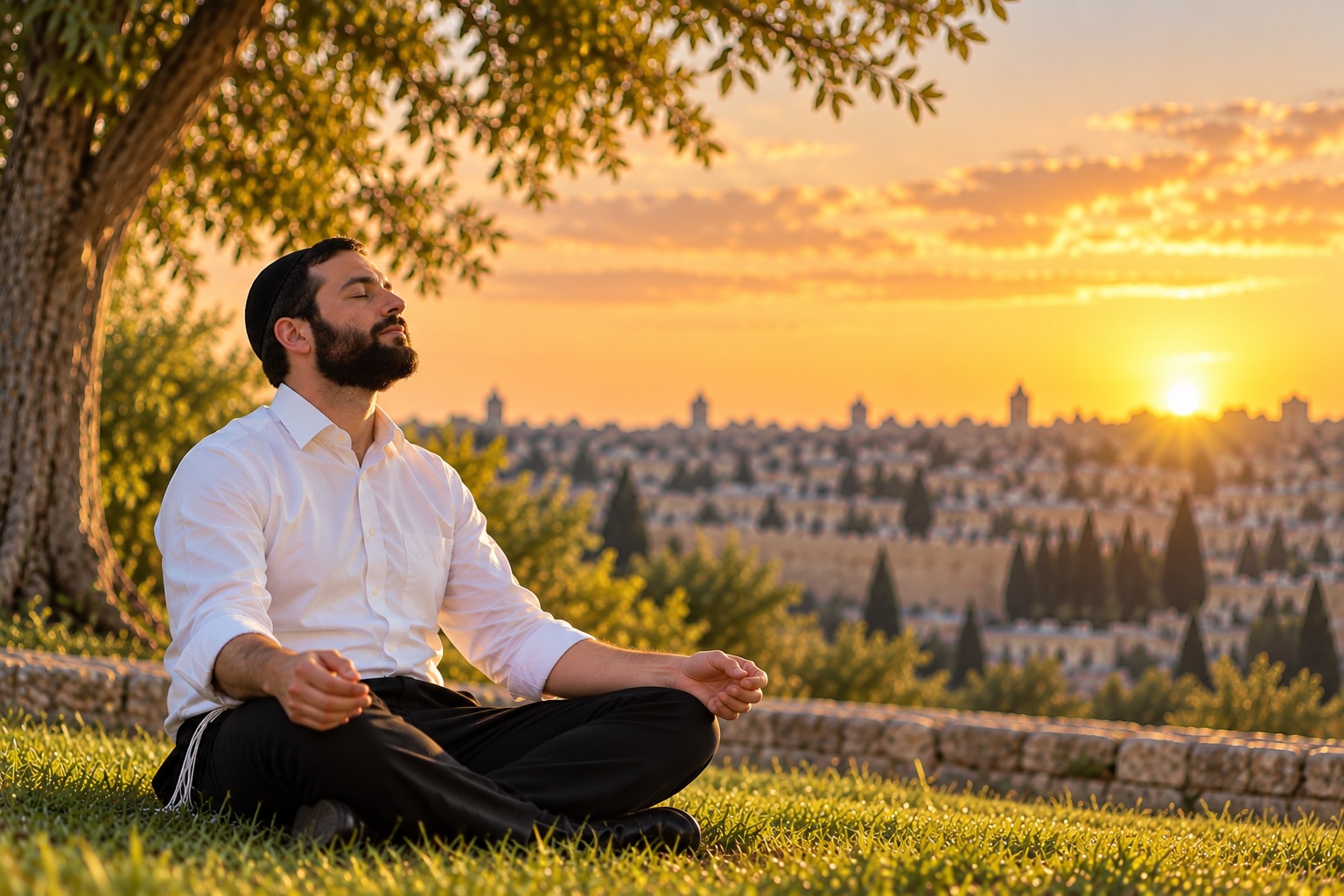
There are moments in life when we suddenly become aware of our breathing. A frightening diagnosis, a phone call in the middle of the night, turbulence on an airplane, waiting for news about someone we love, a siren in Israel, or an antisemitic incident that once would have seemed unimaginable, can make our chest tighten, our heart accelerate, and our breathing become shallow. At those moments, we either instinctively know what to do, or someone reminds us that the way to stay calm is to slow down and take a deep breath.
As we enter Rosh Hashanah 5787, I suspect many of us could use a deep breath. The last few years have been relentless. October 7 and its aftermath, a prolonged war, the extended confrontation with Iran, rising antisemitism around the world, and an increasingly unsettling sense that assumptions we once took for granted can no longer be assumed, have all left us exhausted.
All of that is before we even consider what is happening in our individual worlds. Some are waiting to find a spouse, yearning to have a child, navigating illness, caring for aging parents, struggling with children, worrying about finances, or carrying a private pain nobody else can see. We are functioning, moving, and doing what needs to be done, but sometimes it feels hard to breathe.
Perhaps that is why one of the most important messages of Rosh Hashanah is something extraordinarily simple: remember to breathe. Not because of a new meditation technique or the latest self-help book, but because of the Torah's description of the creation of the first human being, the event we commemorate on Rosh Hashanah:
וַיִּיצֶר ה׳ אֱלֹקים אֶת־הָאָדָם עָפָר מִן־הָאֲדָמָה וַיִּפַּח בְּאַפָּיו נִשְׁמַת חַיִּים וַיְהִי הָאָדָם לְנֶפֶשׁ חַיָּה.
“Hashem formed man from the dust of the earth, and He breathed into his nostrils the breath of life, and man became a living being.”
The body had already been formed, the organs were there, and the physical infrastructure was complete, but Adam wasn't yet alive. Life began with a breath. The Nefesh HaChaim focuses on the Torah's unusual description, vayipach b'apav, God “blew” into Adam. When someone blows, explains Rav Chaim Volozhiner, the air comes from deep within the person. The Torah is teaching us something profound about ourselves. The neshama within us originates, as it were, from the deepest place, from Hashem Himself. Our neshima, our breath, points us toward our neshama, our soul.
That connection is embedded in the final words of Tehillim: “Kol ha'neshama tehalleil Kah, Let every soul praise Hashem.” Chazal hear another meaning in those words: Al kol neshima u'neshima she'adam nosheim, tzarich l'hallel laKadosh Baruch Hu, for every breath a person takes, he should praise Hashem. Every breath is a gift, but perhaps there is something more. Breath isn't merely something for which we praise Hashem. Breath itself can become an expression of faith.
When we panic, our breathing becomes shallow and rapid. When we feel threatened, overwhelmed, or out of control, our body often knows it before our mind has even processed it. Our heart races, our muscles tighten, and our breathing changes. That is why controlled breathing is used by people operating under extraordinary pressure. Navy SEALs famously use a technique known as “box breathing”: inhale slowly through the nose for four seconds, hold for four, exhale slowly for four, and then hold again for four before repeating the cycle. The point isn't that the danger has disappeared or the circumstances have suddenly changed. What has changed is the ability to remain composed and respond rather than simply react.
That is an extraordinarily Jewish idea. Emunah doesn't mean nothing frightening will happen, that everything will unfold according to our plan, or that we deny danger, pain, and uncertainty. Emunah means remembering, even from inside the narrowest place, that we are not alone. Sometimes taking a deliberate breath can be more than a physiological exercise; it can be an act of emunah, a moment of reconnecting our neshima with our neshama and remembering the Source of both.
Usually, on Rosh Hashanah, there is a physical expression of that journey in the shofar. A shofar is a remarkably simple instrument. There are no strings, reeds, or keys, and it doesn't generate its own sound. It takes our breath and amplifies it. The Sfas Emes explains that when we blow the shofar from the breath deep inside ourselves, we are returning to that original breath of creation. We are declaring that beneath all the distractions, mistakes, anxieties, and distance of the past year, the breath Hashem breathed into us remains. The neshama and our relationship with its Source remain intact. We take the very life He placed within us and return it to Him as a sound, and in doing so we acknowledge and coronate Him as the Source of that life.
This year, however, there is a fascinating twist. The first day of Rosh Hashanah is Shabbos and there will be no shofar. We will recite Malchiyos, Zichronos, and Shofaros. We will speak about the shofar, study its pesukim, remember its sounds and reflect on its meaning, and yet the room will remain silent. Perhaps that silence contains a message of its own. The shofar may be silent, but we are still breathing. The instrument isn't producing a sound, but the breath that would have traveled through it remains inside us.
Perhaps on the first day of Rosh Hashanah, Hashem asks us to encounter the message of the shofar even before we hear its sound. Can we find the breath without the shofar? Can we recognize the neshama without needing to be awakened by the blast? Can we remember Who breathed life into us even in the silence? On the second day, when we will, please God, hear the shofar, we will take that breath and send it through the narrow opening until it emerges from the broad end.
The shape of the shofar itself captures the journey. The Rebbe Maharash explained that it begins narrow and becomes wide, reflecting the words min hameitzar karasi Kah, anani bamerchav Kah. We call out from constriction and seek expansiveness. We move from feeling trapped to discovering space, from breathlessness to breath.
Even the sounds of the shofar tell that story. We begin with a tekiah, a long, whole, confident sound. Then comes shevarim, reflecting the times life breaks us and leaves us groaning, our breath interrupted. Sometimes it becomes a teruah, short, staccato bursts that sound almost like the breath of anxiety and urgency. But we never end with shevarim or teruah. After the broken sounds comes another tekiah. Brokenness doesn't get the last word, nor does panic. We return to wholeness and eventually reach the tekiah gedolah, the great, sustained breath.
Halacha itself associates breath with life. The Gemara in Yoma discusses searching through the rubble of a collapsed building on Shabbos to determine whether someone is still alive. How far must we search? Until we can determine whether there is breath at the nostrils, based on the verse, “All in whose nostrils was the breath of the spirit of life.” To breathe is to be alive, but Rosh Hashanah challenges us not merely to be biologically alive. It asks whether we are spiritually alive. Are we living deliberately or reacting constantly? Are we connected to the Source of our breath, or have we become so distracted by the noise around us that we have forgotten where our life comes from?
Our world doesn't make that easy. We live hunched over screens, bombarded by notifications, breaking news, WhatsApp messages, emails, and endless reasons to be outraged or afraid. We rarely sit still, experience silence, or take a full breath before reaching for the next thing demanding our attention. Maybe that is part of the gift of this unusual Rosh Hashanah. The first day is silent, with no shofar to awaken us, only the quiet of Shabbos and the opportunity to become conscious of the breath that Hashem continues to place within us every moment.
Before asking what we will accomplish this year, perhaps we should ask a more fundamental question: What is giving us life? What animates us, fills our lungs and our souls, and what are we living for? On Rosh Hashanah we celebrate the birthday of humanity by returning to humanity's first moment. Hashem breathed into Adam and Adam came alive. This year, before the shofar ever sounds, we can take a slow, deep breath and remember that we are alive, that our lives are gifts, and that there is a neshama inside each of us that no failure, distraction, disappointment, or difficult year can extinguish. We don't control everything that will happen this year, but we know Who gave us this breath and Who will be with us through whatever comes.
The world may still feel narrow. There are real things to worry about, real challenges to confront, real enemies to defeat, and real problems we cannot wish away. Emunah isn't pretending that the meitzar isn't narrow. It is believing that there can be a merchav on the other side and that Hashem is with us as we travel from one to the other.
So sometime on the first day of Rosh Hashanah, when there is no shofar to hear, create a moment to hear its message anyway. Put down the machzor for a few seconds, close your eyes if it helps, and take a slow breath. Inhale for four seconds, hold for four, exhale for four, and hold again for four. With the first breath, think: Hashem gave me life. With the second: Hashem is with me. With the third: I don't have to control everything. With the fourth: I can face whatever this year brings.
Then, on the second day, when the shofar finally sounds, listen differently. Hear your own breath in its cry, the breath Hashem first breathed into Adam and continues to give each of us. Hear it travel from the narrow opening to the wide one, from meitzar to merchav, and allow it to carry our prayer that whatever 5787 brings, we have the faith, strength, and presence to face it.
We came into this world with Hashem's breath, and each Rosh Hashanah brings an opportunity to be renewed by becoming conscious of it again. These days, in many ways, we are all SEALs, exposed to extraordinary pressures and challenges and trying not to become overwhelmed by them. We cannot control all that is happening around us, but we can pause, breathe deeply, reconnect our neshima to our neshama, and remember Who is ultimately in control.
Let this be the year we return to our breath, and through it, return to ourselves and to Hashem.